

Purdue University Press provides quality resources in several key subject areas, including business, technology, health, veterinary sciences, and other selected disciplines in the humanities and sciences. As well as publishing around 25 books a year, and three subscription-based journals, the Press is committed to broadening access to scholarly information using digital technology. As part of this initiative, the Press distributes a number of Open Access electronic-only journals.
This series contains the Open Access records of some books published through Purdue University Press.






























-
Reconsidering the Emergence of the Gay Novel in English and German
James P. Wilper
In Reconsidering the Emergence of the Gay Novel in English and German, James P. Wilper examines a key moment in the development of the modern gay novel by analyzing four novels by German, British, and American writers. Wilper studies how the texts are influenced by and respond and react to four schools of thought regarding male homosexuality in the late nineteenth and early twentieth centuries. The first is legal codes criminalizing sex acts between men and the religious doctrine that informs them. The second is the ancient Greek erotic philosophy, in which a revival of interest took place in the late nineteenth century. The third is sexual science (or “sexology”), which offered various medical and psychological explanations for same-sex desire and was employed variously to defend, as well as to attempt to cure, this "perversion." And fourth, in the wake of the scandal caused by his trials and conviction for "gross indecency," Oscar Wilde became associated with a homosexual stereotype based on "unmanly" behavior. Wilper analyzes the four novels—Thomas Mann's Death in Venice, E. M. Forster's Maurice, Edward Prime-Stevenson's Imre: A Memorandum, and John Henry Mackay's The Hustler—in relation to these schools of thought, and focuses on the exchange and cross-cultural influence between linguistic and cultural contexts on the subject of love and desire between men.
-
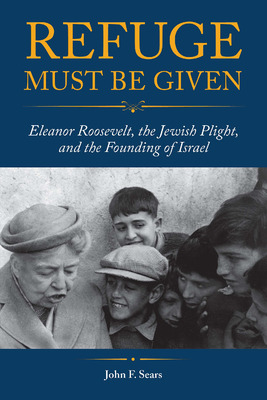
Refuge Must Be Given: Eleanor Roosevelt, the Jewish Plight, and the Founding of Israel
John F. Sears
Refuge Must Be Given details the evolution of Eleanor Roosevelt from someone who harbored negative impressions of Jews to become a leading Gentile champion of Israel in the United States. The book explores, for the first time, Roosevelt’s partnership with the Quaker leader Clarence Pickett in seeking to admit more refugees into the United States, and her relationship with Undersecretary of State Sumner Welles, who was sympathetic to the victims of Nazi persecution yet defended a visa process that failed both Jewish and non-Jewish refugees.
After the war, as a member of the American delegation to the United Nations, Eleanor Roosevelt slowly came to the conclusion that the partition of Palestine was the only solution both for the Jews in the displaced persons camps in Europe, and for the conflict between the Arabs and the Jews. When Israel became a state, she became deeply involved in supporting the work of Youth Aliyah and Hadassah, its American sponsor, in bringing Jewish refugee children to Israel and training them to become productive citizens. Her devotion to Israel reflected some of her deepest beliefs about education, citizenship, and community building. Her excitement about Israel’s accomplishments and her cultural biases, however, blinded her to the impact of Israel’s founding on the Arabs. Visiting the new nation four times and advocating on Israel’s behalf created a warm bond not only between her and the people of Israel, but between her and the American Jewish community.
-
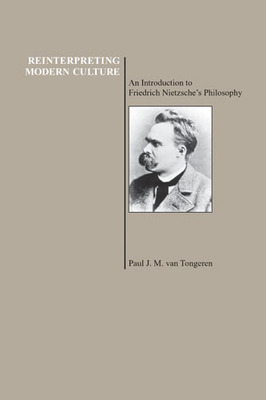
Reinterpreting Modern Culture: An Introduction to Friedrich Nietzsche’s Philosophy
Paul V. Tongeren
Friedrich Nietzsche (1844-1900) presents himself several times as a physician of culture. He considers it his task to make a diagnosis of the culture of his age, to point to the latent or patent diseases, but also to the possibilities to overcome them. His diagnosis, prognosis, and prescriptions implied an overcoming of traditional interpretation of what is going on in the main domains of culture: knowledge, morality, religion, and art. This book presents Nietzsche's thoughts on knowledge and reality, on morality and politics, and on religion. Preceding these main dialogues is an introduction on the art of reading Nietzsche's texts and on his art of writing.
-
Rescuing Rover: A First Aid and Disaster Guide for Dog Owners
Sebastian E. Heath
Whether you're hiking with your canine friend in a remote area or work with a dog on a search-and-rescue team or police force, you need to be prepared for emergencies when veterinary service is not available. Rescuing Rover: A First Aid and Disaster Guide for Dog Owners provides dog owners, handlers, and emergency physicians with an understandable guide for safe treatment until the dog can be transported to a veterinarian. Although a number of books describe some techniques for the emergency care of dogs, there is no single illustrated summary that is as practical. With its concise, easy-to-read instructions, detailed and beautifully rendered illustrations, and convenient format, this book covers such common medical procedures as bandaging an ear and constructing a makeshift muzzle. Written in consultation with canine handlers from FEMA, staff from the AAVDM and the Purdue University School of Veterinary Medicine, it can also be used as a practical learning guide for veterinary medical and technical students.
-
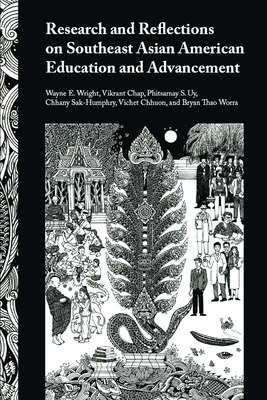
Research and Reflections on Southeast Asian American Education and Advancement
Wayne E. Wright, Vikrant Chap, Phitsamay S. Uy, Chhany Sak-Humphry, Vichet Chhuon, and Bryan Thao Worra
This book is in commemoration of the twentieth anniversary of the Journal of Southeast Asian American Education and Advancement (JSAAEA) and the fiftieth anniversary of Southeast Asian American refugee resettlement in the United States. Pivotal research articles, reviews, and creative works from past issues of JSAAEA have been selected for this volume to document the history and experiences of Cambodian, Laotian, Hmong, and Vietnamese Americans since initial refugee resettlement began in the United States in 1975, as well as the experiences of more recent Southeast Asian immigrant and refugee groups. Reviews of academic books, novels, memoirs, children’s books, and motion pictures further highlight Southeast Asian American perspectives and experiences. Creative works, including poetry and short stories by Cambodian, Laotian, Hmong, Vietnamese, Thai, and Burmese American writers, provide additional and often intimate insights and reflections on the Southeast Asian American experience.
-
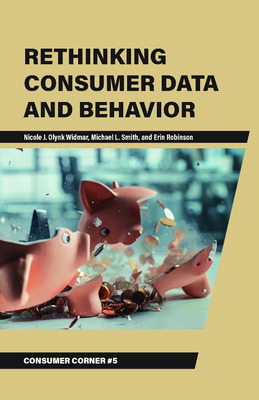
Rethinking Consumer Data and Behavior
Nicole J. Olynk Widmar, Michael L. Smith, and Erin Robinson
Today’s food and agricultural consumers are driven by more than just price—they are influenced by trust, values, and perceptions that are often difficult to measure. Rethinking Consumer Data and Behavior explores what truly shapes consumer choices and how businesses can respond effectively.
This book utilizes research on loyalty, risk, sustainability, and ethical considerations, revealing how these factors influence purchasing decisions in ways traditional data often misses. It examines consumers’ willingness to pay for local and organic products, the impact of food labeling and safety messaging, and the surprising role of sensory cues such as appearance and taste. The book also addresses the behavioral economics behind decision-making and why stated intentions rarely match real-world actions.
Intended for professionals in food and agribusiness, Rethinking Consumer Data and Behavior delivers insights that go beyond the numbers, helping readers interpret consumer signals accurately and adapt strategies to keep pace with a rapidly changing market. By rethinking how we view consumer data and behavior, this book provides a roadmap for building trust, aligning values, and creating lasting connections with today’s consumers.
-
Richard Owen: Scotland 1810, Indiana 1890
Victor Lincoln Albjerg
Richard Dale Owen was born in 1810 in Scotland to a wealthy textile manufacturer and philanthropist. The youngest of eight children, Richard grew up at the family estate of Braxfield House, where he received his early education from private tutors. He would later go on to study chemistry, physics, and natural sciences, among other subjects, traveling between Scotland and Switzerland for his schooling.
Owen arrived in the United States in 1828 to teach in New Haven, Indiana, where his father was running an experimental utopian community of happiness, enlightenment, and prosperity. He would later go on to be Indiana’s second state geologist before enlisting in the army during both the Mexican-American War and the American Civil War. Colonel Owen took command of 4,000 Confederate prisoners at Camp Morton in Indianapolis, where he established new daily routines and rules for supervision of the prisoners. Under Owen’s command, prisoners were allowed to read books and form glee clubs, theatrical groups, and sports teams. He also created a camp bakery staffed by prisoners that proved to be a substantial cost savings, allowing for above-average rations for the prisoners under his watch.
After his military service came to an end, Owen continued to serve as a state geologist as well as becoming a professor at Indiana University, teaching chemistry, language, and natural philosophy. After failing to help secure IU as Indiana’s land-grant school, Owen was recruited to help establish Purdue University, west of Lafayette. The board of trustees selected him to serve as the University’s first president on August 13, 1872. However, Owen and the trustees disagreed on many early initiatives, including his focus on agriculture and push for more comfortable living arrangements for students.
After less than two years serving as president, where he never drew a salary, Owen resigned his position and returned to teaching at Indiana University, until hearing problems caused him to retire in 1879. He spent his remaining years in New Harmony, where he conducted research and published several scientific papers until his tragic death caused by an accidental poisoning at the hand of a local pharmacist.
-
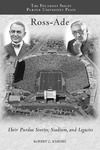
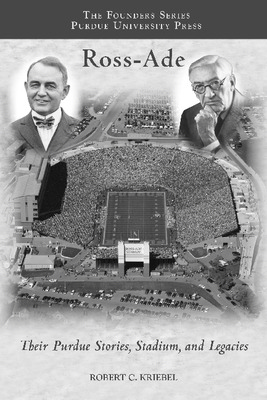
Ross–Ade: Their Purdue Stories, Stadium, and Legacies
Robert C. Kriebel
David Ross (1871–1943) and George Ade (1866–1944) were trustees, distinguished alumni and benefactors of Purdue University. Their friendship began in 1922 and led to their giving land and money for the 1924 construction of Ross-Ade Stadium, now a 70,000 seat athletic landmark on the West Lafayette campus. Their life stories date to 1883 Purdue and involve their separate student experiences and eventual fame. Their lives crossed paths with U.S. First Lady Eleanor Roosevelt, Henry Ford, Amelia Earhart, and Will Rogers among others. Gifts or ideas from Ross or Ade lead to creation of the Purdue Research Foundation, Purdue Airport, Ross Hills Park, and Ross Engineering Camp. They helped Purdue Theater, the Harlequin Club and more. Ade, renowned author and playwright, did butt heads with Purdue administrators at times long ago, but remains a revered figure. Ross's ingenious mechanical inventions of gears still steer millions of motorized vehicles, boats, tractors, even golf carts the world over.
-
Self-Publishing and Collection Development: Opportunities and Challenges for Libraries
Robert P. Holley
The current publishing environment has experienced a drastic change in the way content is created, delivered, and acquired, particularly for libraries. With the increasing importance of digital publishing, more than half the titles published in the United States are self-published. With this growth in self-published materials, librarians, publishers, and vendors have been forced to rethink channels of production, distribution, and access as it applies to the new content. Self-Publishing and Collection Development: Opportunities and Challenges for Libraries will address multiple aspects of how public and academic libraries can deal with the increase in self-published titles.
While both academic and public libraries have started to grapple with the burgeoning issues associated with self-published books, many difficulties remain. To develop effective policies and procedures, stakeholders must now tackle questions associated with the transformation of the publishing landscape. Obstacles to self-publishing include the lack of reviews, the absence of cataloging and bibliographic control, proprietary formats for e-books, and the difficulty for vendors in providing these works.
General chapters will include information on reviewing sources, cataloging and bibliographic control, and vendor issues. Information addressing public libraries issues will highlight initiatives to make self-published materials available at the Los Gatos Public Library in California and the Kent District Library in Michigan. Chapters on academic library issues will address why self-published materials are important for academic institutions, especially those with comprehensive collecting interests. Several self-published authors focus on how they attempt to make their works more suitable for public libraries. Finally, the book concludes with a bibliographic essay on self-publishing
As the term “traditional publishing” begins to fade and new content producers join the conversation, librarians, publishers, and vendors will play an important role in facilitating and managing the shift.
-
Shattered Liberation: Sexualized Violence Against Holocaust Survivors, 1943–1946
Nina Paulovicova, Anna Cichopek-Gajraj, and Joanna Beata Michlic
Shattered Liberation: Sexualized Violence Against Holocaust Survivors, 1943–1946 challenges the notion of joyous liberation of Holocaust survivors by the Red Army, which is often embedded in popular imagination and collective memory. This is one of the first volumes to shine light on the sexualized violence that some Holocaust survivors endured in the hands of the Soviet Army, partisans, rescuers, and army personnel in filtration camps during the liberation process. By focusing on testimonies and memoirs, this book discusses in detail a wide range of interactions, including sexual violence, rape, forced cohabitation, sex barter, aid, and romance. The book addresses methodological challenges of employing survivors’ testimonies in an analysis of a traumatic history of liberation sexualized violence. It explores the strategies survivors employed while recounting these traumatic experiences, and examines how survivors’ experiences of sexualized violence during liberation have been both included in and excluded from public memory. By challenging the popular notion of liberation as universally positive and instead focusing on the memories of Jewish survivors, Shattered Liberation uncovers a far more complicated, if not devastating, reality.
-
Sisters in Science: Conversations with Black Women Scientists on Race, Gender, and Their Passion for Science
Diann Jordan
Author Diann Jordan took a journey to find out what inspired and daunted black women in their desire to become scientists in America. Letting 18 prominent black women scientists talk for themselves, Sisters in Science becomes an oral history stretching across decades and disciplines and desires. From Yvonne Clark, the first black woman to be awarded a B.S. in mechanical engineering to Georgia Dunston, a microbiologist who is researching the genetic code for her race, to Shirley Jackson, whose aspiration led to the presidency of Rensselaer Polytechnic Institute, Jordan has created a significant record of women who persevered to become firsts in many of their fields. It all began for Jordan when she was asked to give a presentation on black women scientists. She found little information and little help. After almost nine years of work, the stories of black women scientists can finally be told.
-
Soil and Water Education for Grades 3-12
Natalie J. Carroll, Christian Y. Oseto, and Timothy J. Gibb
Soil and Water Education for Grades 3–12 was written for youth who enjoy learning about science and two critical natural resources: soil and water. Level 1 introduces basic terms and concepts, and is intended for youth in grades 3–5. Activities focus on understanding important soil and water processes. Designed for students in grades 6–8, Level 2 offers readers more concrete examples of advanced soil and water concepts. The exercises in Level 3, which is geared toward grades 9–12, are divided into sections based on how readers might use the information they have learned, placing them in the shoes of homeowners, residents of a watershed, food and fiber producers (farmers), mayors, teachers, and legislators. This level delves deeper into soil and water science concepts, and prepares readers who may be interested in studying these topics at postsecondary institutions. The final section presented in Soil and Water Education for Grades 3–12, the facilitator’s guide, provides answers to the youth activities as well as tips about working with the next generation of scientists in the field.
-
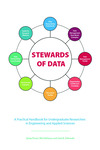
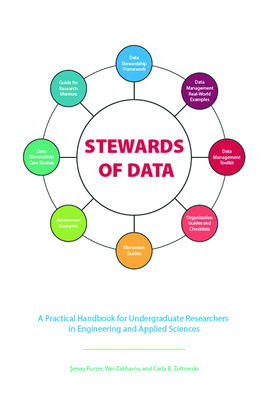
Stewards of Data: A Practical Handbook for Undergraduate Researchers in Engineering and Applied Sciences
Şenay Purzer, Wei Zakharov, and Carla B. Zoltowski
Filled with actionable guides and real-world examples, Stewards of Data: A Practical Handbook for Undergraduate Researchers in Engineering and Applied Sciences allows readers to utilize the provided templates and guides almost immediately. In today’s world, data is ubiquitous and AI is growing exponentially. Practicing ethical data management is, therefore, crucial. Ensuring that data is findable, accessible, interoperable, and reusable is essential. This book is an interdisciplinary effort aimed at embedding ethical data life-cycle management education into undergraduate research. The authors present a Data Steward Framework, which serves as a guide for undergraduate researchers, the graduate students who mentor them, postdocs, and faculty. The toolkit prompts mentors and undergraduates to reason through ethical considerations, future consequences, and trade-off decisions as they plan, collect, describe, manage, visualize, curate, and share their data.
-
Teaching and Learning in STEM With Computation, Modeling, and Simulation Practices
Alejandra J. Magana
Computation, modeling, and simulation practices are commonplace in the STEM workplace, yet formal training embedded in disciplinary practices is not as standard in the undergraduate classroom. Teaching and Learning in STEM With Computation, Modeling, and Simulation Practices: A Guide for Practitioners and Researchers gives instructors a handbook to ensure their curriculum bridges the gap between the classroom and workplace by equipping students with computational skills and preparing them for a rewarding career in STEM. Grounded in theory and supported by fifteen years of education research at the undergraduate level, this book provides instructional, pedagogical, and assessment guidance for integrating modeling and simulation practices into the undergraduate classroom.
-
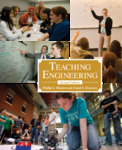
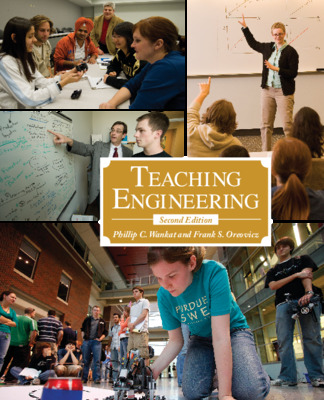
Teaching Engineering, Second Edition
Phillip C. Wankat and Frank S. Oreovicz
The majority of professors have never had a formal course in education, and the most common method for learning how to teach is on-the-job training. This represents a challenge for disciplines with ever more complex subject matter, and a lost opportunity when new active learning approaches to education are yielding dramatic improvements in student learning and retention.
This book aims to cover all aspects of teaching engineering and other technical subjects. It presents both practical matters and educational theories in a format useful for both new and experienced teachers. It is organized to start with specific, practical teaching applications and then leads to psychological and educational theories. The "practical orientation" section explains how to develop objectives and then use them to enhance student learning, and the "theoretical orientation" section discusses the theoretical basis for learning/teaching and its impact on students.
Written mainly for PhD students and professors in all areas of engineering, the book may be used as a text for graduate-level classes and professional workshops or by professionals who wish to read it on their own. Although the focus is engineering education, most of this book will be useful to teachers in other disciplines. Teaching is a complex human activity, so it is impossible to develop a formula that guarantees it will be excellent. However, the methods in this book will help all professors become good teachers while spending less time preparing for the classroom.
This is a new edition of the well-received volume published by McGraw-Hill in 1993. It includes an entirely revised section on the Accreditation Board for Engineering and Technology (ABET) and new sections on the characteristics of great teachers, different active learning methods, the application of technology in the classroom (from clickers to intelligent tutorial systems), and how people learn.
Preface
Chapter 1: Introduction: Teaching Engineering
Chapter 2: Efficiency
Chapter 3: Designing Your First Class
Chapter 4: Courses: Objectives, Textbooks, and Accreditation
Chapter 5: Problem Solving and Creativity
Chapter 6: Lectures
Chapter 7: Active Learning
Chapter 8: Teaching with Technology
Chapter 9: Design and Laboratory
Chapter 10: One-to-One Teaching and Advising
Chapter 11: Testing, Homework, and Grading
Chapter 12: Student Cheating, Discipline, and Ethics
Chapter 13: Psychological Type and Learning
Chapter 14: Models of Cognitive Development: Piaget and Perry
Chapter 15: Learning Theories
Chapter 16: Evaluation of Teaching
Chapter 17: Professional Concerns
Appendix A: Obtaining an Academic Position
Appendix B: Sample Teaching Engineering Course Outline
-
Teaching Integrated STEM in Middle School
S. Selcen Guzey
Teaching Integrated STEM in Middle School is a valuable resource for educators, researchers, and policymakers who are committed to furthering integrated STEM education. Through a review of the literature on the topic, the volume offers a clear understanding of the impact of integrated STEM education on instructors’ teaching practices and student outcomes. The book presents a framework and instructional guide that educators can utilize to develop new curricular materials. Two sample units—focused on designing a two-stage water filter and formulating sunscreen—provide step-by-step guidance for lesson implementation and offer strategies for assisting students as they use engineering models to devise design solutions. Teaching Integrated STEM in Middle School also outlines future research directions that are essential for the advancement of integrated STEM education.
-
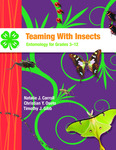
Teaming With Insects: Entomology for Grades 3-12
Natalie J. Carroll, Christian Y. Oseto, and Timothy J. Gibb
Teaming With Insects: Entomology for Grades 3–12 is written for youth who enjoy learning about and studying science and nature. Insects have been around for millions of years and have evolved and adapted to many different habitats. Adaptations involving their anatomy, physiology, and behavior are what make insects so diverse and interesting. More than 1 million species of insects are known to scientists, and they believe there may be up to 40 million more we have yet to discover. Most people consider insects pests, and some insects do damage to homes, plants, crops, and stored foods. Others harm humans and animals by biting, stinging, and spreading diseases. The vast majority of insects, however, are beneficial to our ecosystem, and a few, such as honeybees and silkworms, provide direct economic benefits to humans. This book is divided into four easy-to-use sections, each of which is designed with a specific purpose in mind and is tailored to a particular grade level. The first section is geared to students in grades 3 through 5. It introduces young readers to the world of insects, examining their physical appearance and movement. Level 2, intended for individuals in grades 6 through 8, demonstrates how to make insect collection tools and expands on the basic concepts of biodiversity, invasive species, integrated pest management, and forensic entomology. Suited for students in grades 9 through 12, level 3 focuses on using the scientific method, supplying reference materials for personalized learning and further research. The final section presented in Teaming With Insects, the facilitator’s guide, provides suggestions and answers to the youth activities as well as information about working with future entomologists.
-
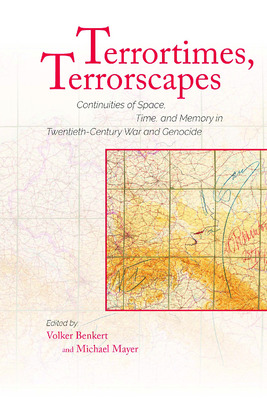
Terrortimes, Terrorscapes: Continuities of Space, Time, and Memory in Twentieth-Century War and Genocide
Volker Benkert and Michael Mayer
Terrortimes, Terrorscapes: Continuities of Space, Time, and Memory in Twentieth-Century War and Genocide investigates interconnections between space and violence throughout the twentieth century, and how such connections informed collective memory. The interdisciplinary volume shows how entangled notions of time and space amplified by memory narratives led to continuities of violence across different conflicts creating “terrortimes” and “terrorscapes” in their wake. The volume examines such continuities of violence with the help of an analytical framework built around different themes. Its first part, spatial and temporal continuities of violence, looks at contested spaces and ideas of national, ethnic, or religious homogeneity that are often at the heart of prolonged conflicts. The second part, on states and actors, addresses the role of states as enablers of violence, asymmetric power dynamics, and the connection between imperialism and genocide in Africa. Imagination and emotion—the focus of the third part—explores utopian visions and their limits that instigate or hinder, and the mobilization of emotion through propaganda. Finally, the fourth part shows how the recollection of the past sometimes triggers new terrortimes. Departing from an understanding of violence limited to certain areas and time frames, this volume describes continuities of violence as overlapping fabrics woven together from notions of space, time, and memory.
-
The Arguments of Agriculture: A Casebook in Contemporary Agricultural Controversy
Jan Wojcik
The Arguments of Agriculture presents the major issues, questions, and conflicting opinions of influential policymakers and critics concerning the role and future of modern agriculture. The author urges the reader to weight and consider all positions and supplies a primer in the basic arguments of agriculture. Each chapter begins with a series of hypothetical cases that illustrate the range of theoretical issues discussed in the chapter. The next section analyzes the basic issues, and the section entitled "Review" summarizes and contrasts the opinions of a number of prominent critics. Each chapter concludes with a list of recommended readings.
-
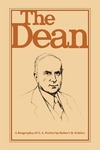
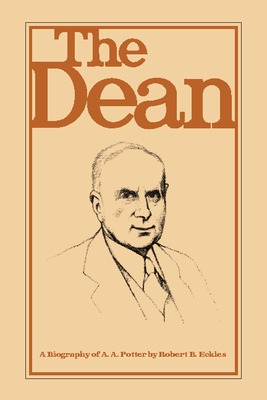
The Dean: A Biography of A. A. Potter
Robert B. Eckles
More than 20,000 engineering students at Purdue University have been touched in some way by the ides or the warm personality of Andrey A. Potter, who served for 33 years as dean of the Schools of Engineering at Purdue, the world’s largest engineering institution.
Awarded the honorary title of “Dean of the Deans of Engineering Universities” in 1949 by his alma mater, MIT, Potter has been a teacher for 48 years and a dean for 40. Among his thousands of colleagues at Kansas State, Purdue, and the professional societies he has headed, he is known with respect and affection simply as “the Dean.”
This book, illustrated with photographs, traces his life from his boyhood in Russia and his journey at age 15 to America where, he contends, his life really began. We see him as a student cutting lab classes to attend an afternoon concert of the Boston Symphony, as a young man growing a van Dyke beard to make himself look older for his first job as an engineer with General Electric, and as a new assistant professor at Kansas State, courting his schoolteacher-sweetheart in a horse and buggy.
His contributions to the engineering profession are many. He was president of the leading professional societies, prepared an exhaustive state-of-the-art study of engineering, and enhanced the public service aspects of his field by participating in government advisory boards. Greatly admired for his work with the National Patent Planning Commission, where he protected the right of the inventor to the fruits of his ingenuity, he is also respected for his publications in his own area of research: power generation and super-critical steam. A selected bibliography lists his writings.
At Kansas State and Purdue, he organized curricula to emphasize study that could be used by engineers to solve problems in agriculture and industry; this brought farmers and businessmen closer to the campus and more aware of the university’s service to their state. He found deepest pleasure, however, not in these accomplishments, but in the personal contacts he established with students and colleagues. In his own words, “the secret of success is to love one’s fellow men.”
-
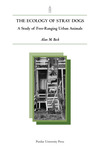
The Ecology of Stray Dogs: A Study of Free-Ranging Urban Animals
Alan M. Beck
This readable contribution should be in the hands of any city or state agency dealing with dog problems or with public health problems. The book should also be of considerable interest to all ecologists, behaviorists, and biologists. This is a unique book in which the ecologist's methods are applied to understanding and possibly solving one of our urban problems. This fascinating small monograph is the work of a man who-armed with camera, tape recorder and thermometer and driving not a Land-Rover but a used sedan-studied free-ranging dogs among the bricks of Baltimore.
-
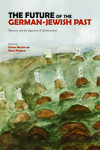
The Future of the German-Jewish Past: Memory and the Question of Antisemitism
Gideon Reuveni and Diana University Franklin
Germany’s acceptance of its direct responsibility for the Holocaust has strengthened its relationship with Israel and has led to a deep commitment to combat antisemitism and rebuild Jewish life in Germany. As we draw close to a time when there will be no more firsthand experience of the horrors of the Holocaust, there is great concern about what will happen when German responsibility turns into history. Will the present taboo against open antisemitism be lifted as collective memory fades? There are alarming signs of the rise of the far right, which includes blatantly antisemitic elements, already visible in public discourse. The evidence is unmistakable―overt antisemitism is dramatically increasing once more.
The Future of the German-Jewish Past deals with the formidable challenges created by these developments. It is conceptualized to offer a variety of perspectives and views on the question of the future of the German-Jewish past. The volume addresses topics such as antisemitism, Holocaust memory, historiography, and political issues relating to the future relationship between Jews, Israel, and Germany. While the central focus of this volume is Germany, the implications go beyond the German-Jewish experience and relate to some of the broader challenges facing modern societies today.
-
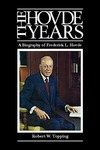
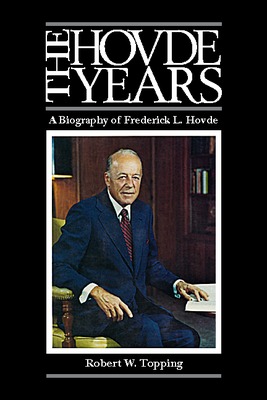
The Hovde Years: A Biography of Frederick L. Hovde
Robert W. Topping
This biography details Hovde’s life and times from his birth at Erie, Pennsylvania, through his boyhood at Devils Lake, North Dakota, and includes his student days at the University of Minnesota and in England and Europe as a Rhodes scholar. In addition, it outlines his career from the time he returned to the United States from England in 1932, as well as when he went back again in 1941 as the United States secretary for American-British scientific research and development exchange efforts. Principally, it covers his twenty-five years as president of Purdue University, his impact on higher education generally, and his retirement in 1971.
The book depicts Hovde the president and Hovde the man. It focuses on the growth of Purdue University from the post-World War II years through the tumultuous times of the late 1960s and Hovde’s own comments on those periods.
-
The Leader’s Imperative: Ethics, Integrity, and Responsibility
J. C. Ficarrotta
Drawn from the "Alice McDermott Memorial Lectures in Applied Ethics" held at the United States Air Force Academy, these 20 essays contribute to our understanding of ethics and leadership. Contributions come from a distinguished and diverse group of individuals including, Allan Bloom, Reverend Edward A. Malloy, John T. Noonan, Jr., James F. Childress, Christina Hoff Sommers, General Ronald R. Fogelman, and William J. Bennett. The range of topics include moral certainty and sensibility, professional and personal integrity, emergency ethics and the responsibility of war criminals, the just war and public policy, unethical adversaries and military obligation, and liberal education and character.
-
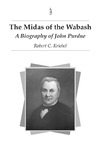
The Midas of the Wabash: A Biography of John Purdue
Robert C. Kriebel
A biography of noted businessman John Purdue (1802-1876), whose donations of time and money led to the founding of Indiana's land grant university-Purdue University-in 1869. Purdue also contributed to economically important bridge, railroad, and cemetery construction, the existence of Lafayette Savings Bank and the Battle Ground Collegiate Institute, cattle farming, Lafayette's public school system, and countless other worthy enterprises. To date there has been no published full length study of Mr. Purdue's life and work beyond casual street-talk that portrayed Purdue as a difficult individual with whom to work. This biography incorporates research efforts by previous writers with facts gleaned from newspaper coverage, official documents, and a few rare samples of Mr. Purdue's letters. In this way, a complete picture of the man and myth is generated.